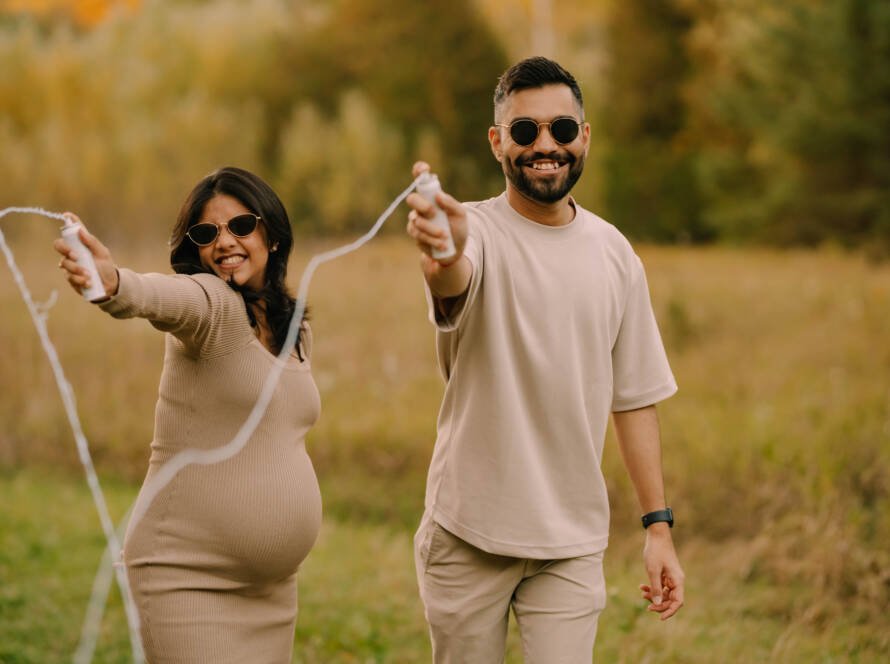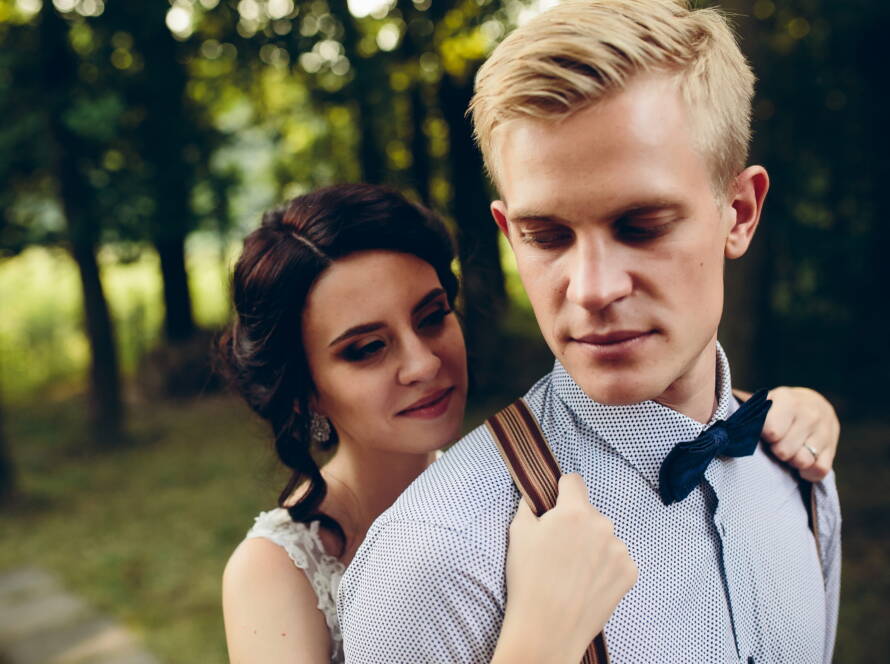
The biggest wedding photography trend in Toronto in 2026 is docu-editorial photography documentary-style coverage finished with the polish of a fashion editorial. Couples across the GTA are booking photographers who can disappear during the ceremony and then direct a portrait session that looks like a magazine spread, all in the same day.
The shift away from rigid, traditional posing has been building for years, but 2026 is the year it became the default rather than the alternative. Alongside it, film-inspired editing, direct flash, moody lighting and prompt-based portraits have reshaped what a modern Toronto wedding gallery looks like.
Below are the nine styles defining wedding photography this year, what each one actually looks like, and how to work out which fits your day.
The 2026 Toronto Wedding Photography Trends at a Glance
| Style | What it looks like | Best for |
|---|---|---|
| Docu-editorial | Real moments, editorial finish | Almost every modern wedding |
| Candid / documentary | Unposed, observed, story-driven | Couples who hate posing |
| 35mm film & film emulation | Grain, warm shadows, soft highlights | Timeless, nostalgic galleries |
| Direct flash | Hard shadows, high contrast, nightlife energy | Receptions and after-parties |
| Cinematic & moody lighting | Warm tungsten, candlelight, deep shadow | Evening and indoor celebrations |
| Editorial portraits | Movement-led, fashion-inspired posing | Couple and bridal party portraits |
| Fine art | Light, airy, natural light, detail-driven | Garden and daytime weddings |
| Drone / aerial | Overhead venue and landscape context | Outdoor and scenic venues |
| Social-first delivery | Sneak peeks, vertical crops, short clips | Couples sharing in real time |
Docu-Editorial Photography: The Defining Style of 2026
Docu-editorial is not a compromise between documentary and editorial photography. It is a deliberate blend of the two, applied to different parts of the day.
The documentary half means the photographer observes rather than orchestrates. Nobody is asked to repeat their first look. Nobody is pulled back into position for a better angle on a hug that already happened. The editorial half arrives during portraits, where lighting, composition and direction are used with real intention the same craft you would find behind a fashion campaign, applied to two people who are in love and slightly nervous.
What makes it the leading trend is that it solves the problem couples have complained about for a decade. Purely documentary galleries sometimes felt visually flat. Purely editorial galleries sometimes felt emotionally hollow. Docu-editorial gives couples both: the honesty of moments that genuinely happened, presented with the visual quality of images that were genuinely designed.
What Docu-Editorial Actually Means on a Wedding Day
The clearest way to understand the style is to follow it through a timeline.
Getting ready is documented, not directed. The photographer works quietly around the room, catching a mother fixing a veil and a groom’s hands shaking through a tie knot. Nothing is staged, and the mess in the background stays in the frame because it is part of the memory.
The ceremony is untouched. No repositioning, no interruptions, no asking anyone to hold a moment.
Portraits are where the editorial layer takes over. This is the one part of the day where properly directed light is chosen, backgrounds are considered, and the couple is guided through movement rather than left to guess what to do with their hands.
The reception returns to documentary coverage, usually with flash. Speeches, dance floor, the aunties who have taken over the DJ booth all of it observed as it unfolds.
Why Toronto Couples Are Choosing It
Toronto’s venues suit this style unusually well. Industrial and heritage spaces like the Distillery District and the Fermenting Cellar give photographers strong architectural lines for editorial portraits while still offering quiet corners for documentary coverage. Casa Loma and Evergreen Brick Works do the same with very different textures, and there are plenty more wedding photography locations across Toronto worth considering.
There is also a practical reason. Couples are protective of their wedding day timeline now. Docu-editorial concentrates all the directed work into one focused portrait window, often 25 to 35 minutes rather than spreading posed setups across the whole day. You get the polished images without losing your own wedding to a short list.
Candid and Documentary Coverage: Why Unposed Is Winning
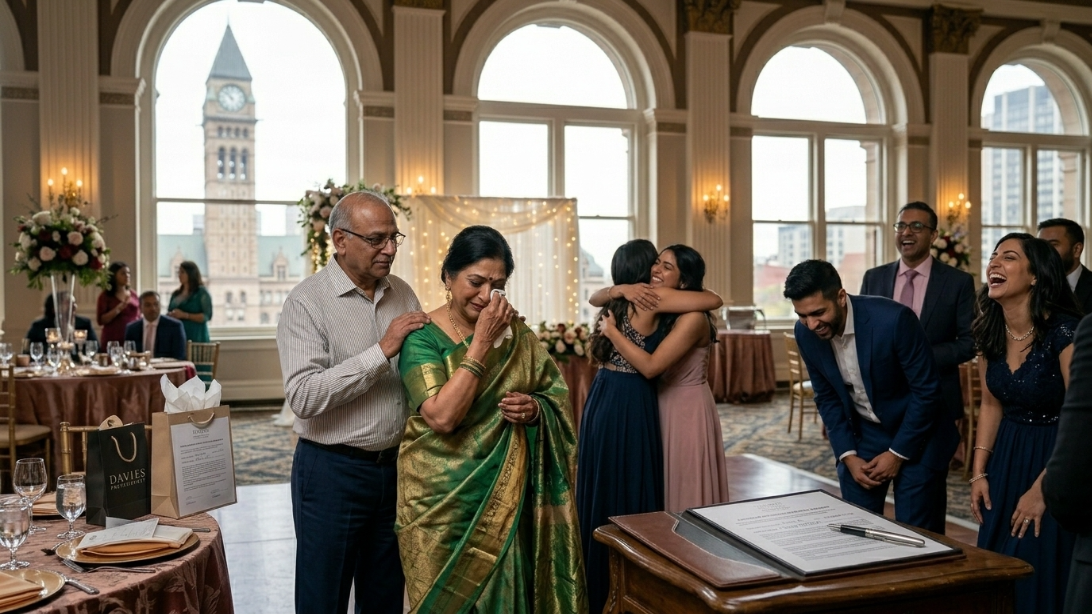
The demand for unposed coverage keeps climbing, and it is driving what couples ask for in enquiries. Requests have shifted from “we want nice photos of us” to “we want to see what the day actually felt like.”
Unposed coverage captures the things a shot list cannot anticipate. A grandfather quietly wiping his eyes during a speech. A bridesmaid is laughing so hard she has to sit down. The five seconds after the ceremony ends when nobody knows where to look. These frames carry weight later precisely because nobody arranged them.
The trade-off is real, and worth naming: unposed coverage depends entirely on the photographer’s anticipation. There is no second take. A photographer who is not reading the room will miss the moment, and no amount of editing recovers it.
Candid vs Documentary The Difference Couples Miss
Candid photography means the subject is unaware or unposed in a given frame. It describes individual images, and it can sit inside any style.
Documentary photography is a whole approach to the day the photographer commits to observing rather than directing, from start to finish, and the gallery is built as a chronological narrative.
Most photographers who advertise “candid” are really offering documentary-leaning coverage with a directed portrait session. At Moment Tracker, that is exactly the balance we work to: documentary throughout the day, directed only where direction genuinely improves the image.
35mm Film and Vintage-Inspired Editing
Film has moved from niche to genuinely requested. Toronto couples are asking for 35mm coverage by name, and photographers who do not shoot film are editing digital files to behave like it.
The look is specific: visible grain, halation glowing softly around bright edges, highlights that roll off instead of clipping, and shadows that lean warm rather than neutral. Skin tones sit softer. Colours are muted in a way that reads as memory rather than record.
Two honest notes if you are considering it. Real film means fewer frames a photographer shooting 35mm is working with 36 exposures per roll and will be far more selective. It also means a longer turnaround, since rolls go to a lab before you see anything. Many photographers now shoot hybrid: digital for coverage volume, a roll or two of film for portraits and quiet moments. That combination gives you the texture without the risk.
Film emulation on digital files is the far more common route, and done well it holds up. Done badly it looks like a preset dragged over everything at once. Ask to see a full gallery before you judge it.
Direct Flash Photography Is Back
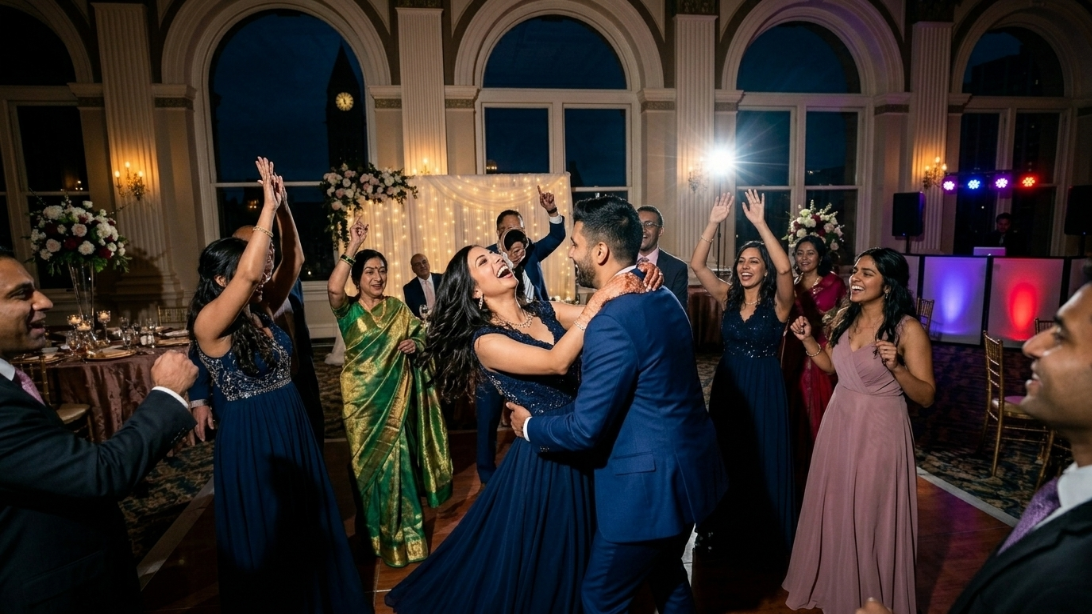
Direct on-camera flash, the hard, unapologetic look that wedding photography spent twenty years trying to soften is one of the most requested aesthetics of 2026.
It produces high contrast, crisp shadows behind the subject, and a slightly overexposed brightness that reads as nightlife rather than portrait studio. The reference points are fashion week street photography and 90s paparazzi frames. It has energy in a way that soft, evenly lit reception photos never quite manage.
Direct flash works best for:
- Reception and dance floor coverage
- Bridal party portraits with attitude
- Late-night exits and sparkler moments
- After-party and post-reception frames
It is a poor fit for ceremonies, daytime portraits, and weddings styled around a soft, romantic palette. If your entire aesthetic is neutral tones and natural light, direct flash will fight it. The best galleries use it as a deliberate shift in energy for the last few hours of the night, not as a house style applied to everything.
Cinematic and Moody Lighting
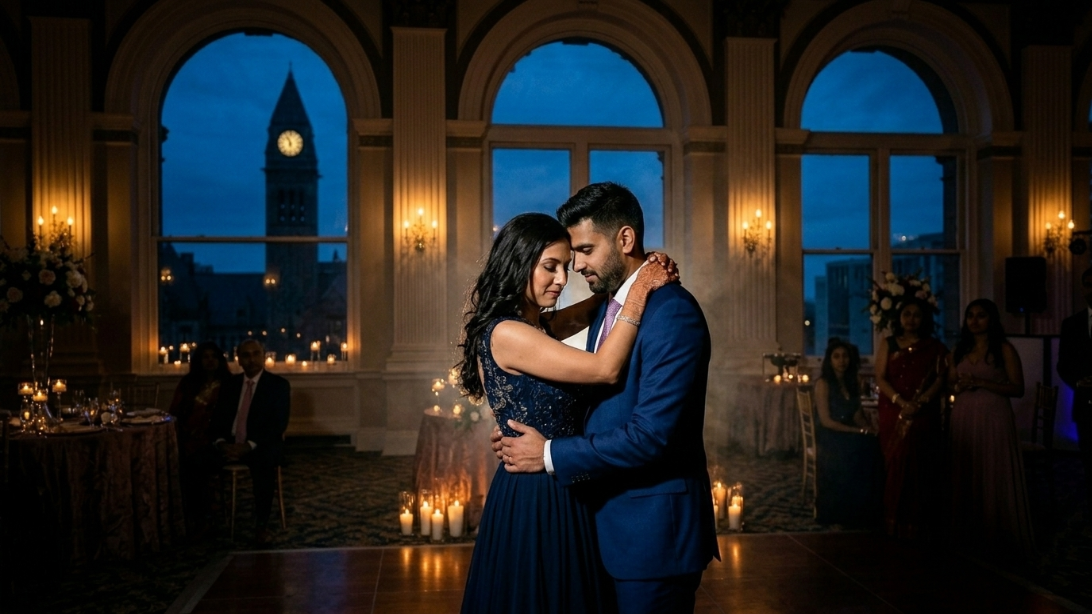
Bright-and-airy has given ground to the atmosphere. Couples are choosing lighting that creates mood rather than lighting that simply makes everything visible.
Warm tungsten light, candlelit tables, deep shadow, backlighting, silhouettes against windows, and controlled contrast are all being used to make reception images feel closer to a film still than a record of an event. The intent is emotional depth. You should be able to feel the temperature of the room in the photograph.
Blue Hour and Candlelight Receptions
Blue hour, the roughly twenty minutes after sunset when the sky turns deep and even, has become one of the most requested portrait windows of the night. Paired with a warm light on the couple, it produces the cool-and-warm contrast that reads as cinematic instantly.
Candlelit ceremonies and receptions are trending alongside it, and they demand a photographer comfortable working at high ISO with fast lenses. Worth confirming this during your consultation. Low light is where skill gaps show most clearly.
Golden Hour Still Earns Its Spot
Golden hour has not gone anywhere. It is simply being used more selectively now, as one part of a varied gallery rather than the entire visual identity of the wedding.
One practical piece of Toronto planning advice: golden hour moves dramatically across the season. A June wedding gets that light close to 8:30 pm, while an October wedding gets it before 6 pm, often mid-dinner. Ask your photographer to identify the exact window for your date and build a 20-minute gap into the timeline. Stepping away from the reception for that light is almost always worth it.
Editorial Portraits and Prompt-Based Posing
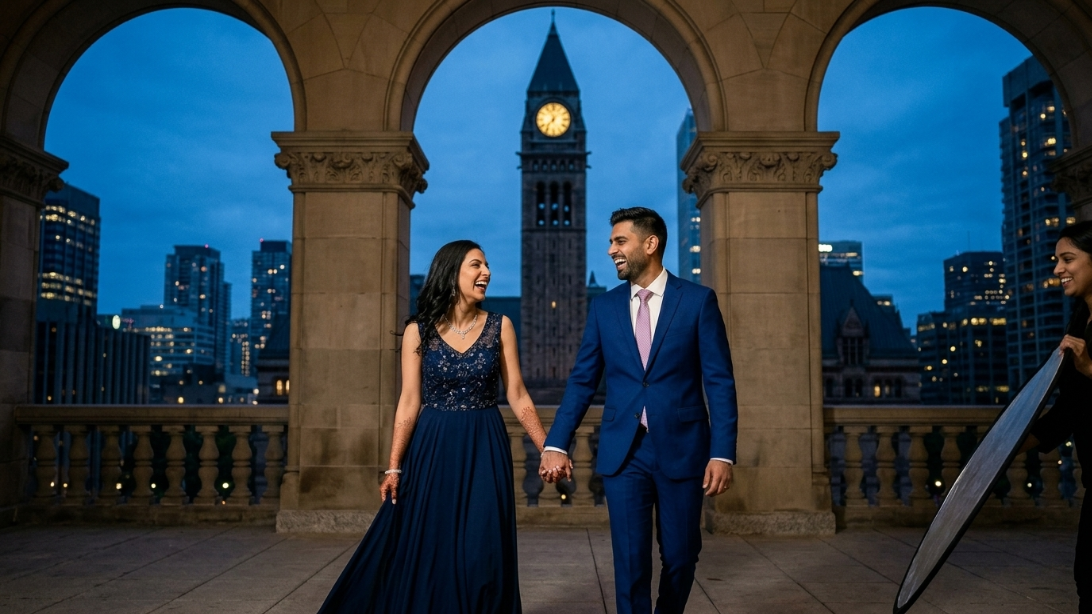
Traditional posing is being replaced by prompting. Instead of arranging limbs, photographers give couples something to do, then photograph what happens.
The prompts are simple and specific:
- Walk toward me and tell each other what you were thinking during the ceremony.
- Whisper the last thing that made you properly laugh.
- Hold on to each other and take three slow breaths. I’ll tell you when.
- Dance badly. On purpose.
What comes out of prompting is a real expression inside a controlled frame. The photographer still chooses the light, the background and the composition, so the image is deliberate. The couple is just not performing.
This is why editorial portraits in 2026 feel closer to a campaign shoot than a portrait sitting. There is movement, there is genuine interaction, and there is almost never a stiff, symmetrical, hands-at-sides frame in the entire set.
Fine Art Wedding Photography: The Soft Counterpoint
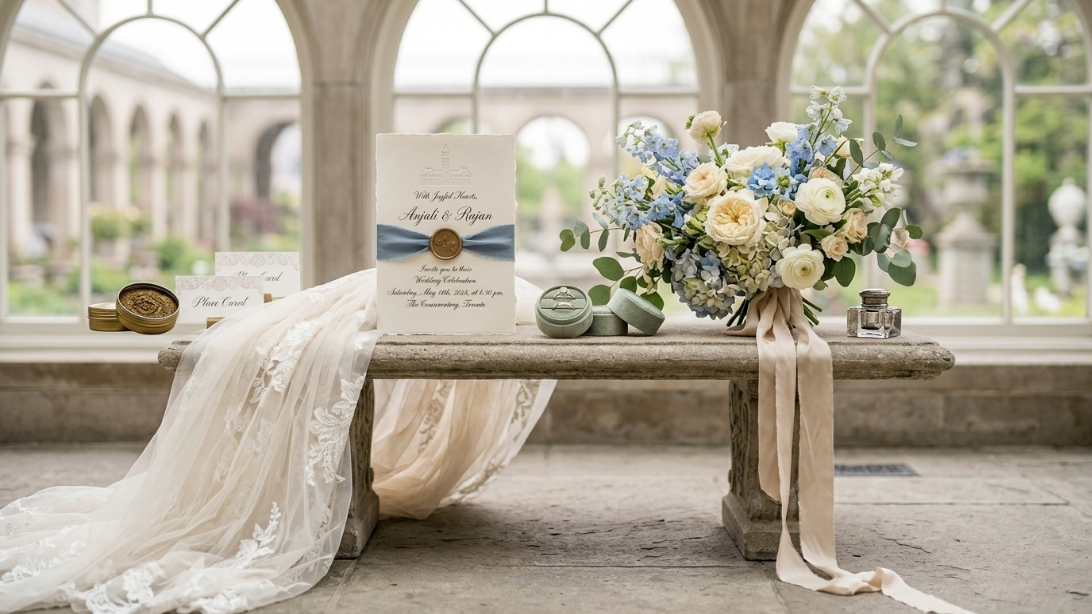
Not every couple wants to be moody. Fine art photography sits at the opposite end light, airy, natural-light-driven, with pale tones and clean compositions.
The style pays close attention to details: the texture of a dress, the arrangement of stationery, rings styled on fabric, light falling through a window onto flowers. Frames tend to be uncluttered and quietly composed, with negative space used deliberately.
It suits garden weddings, daytime celebrations, estate and conservatory venues, and couples whose whole aesthetic runs toward soft neutrals and minimal styling. If you are drawn to fine art, be aware that it depends heavily on good natural light. It is a harder style to sustain through a dark evening reception, and most fine art photographers will shift approach after sunset.
Drone and Aerial Wedding Coverage
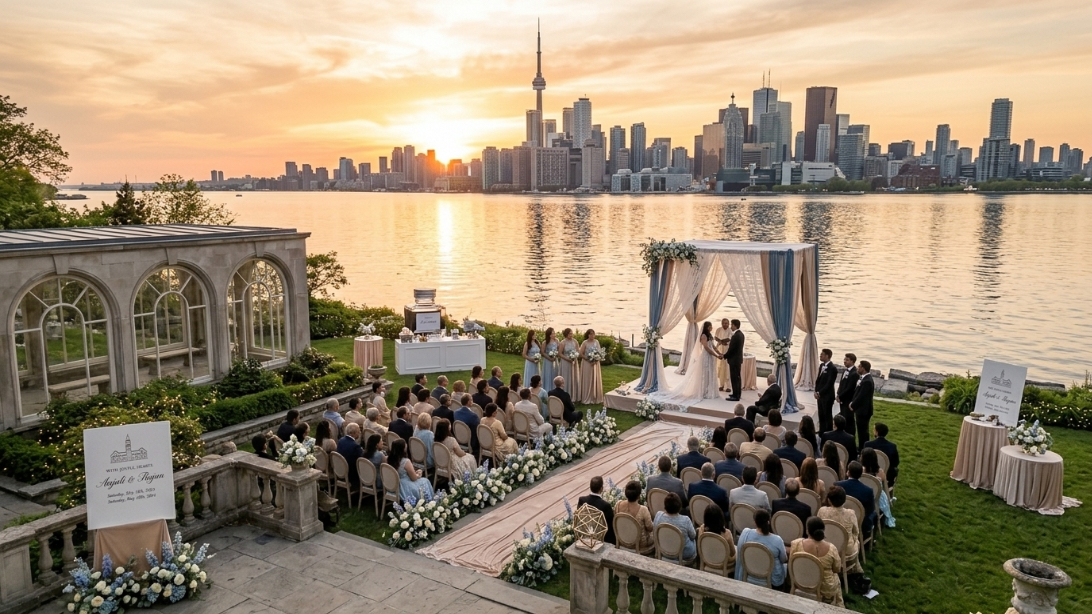
Drone coverage adds a perspective nothing else can. Overhead ceremony frames, venue reveals, and wide landscape context all give a gallery scale, and they work particularly well for outdoor, waterfront and destination weddings.
The practical limits matter as much as the creative upside. In Canada, drone operation requires a certified pilot and compliance with Transport Canada regulations, and much of the Toronto area sits within controlled airspace around Pearson and Billy Bishop. The City of Toronto also restricts drone take-off and landing in municipal parks. Many venues have their own policies on top of that.
None of this makes drone coverage impossible, it just means it needs to be arranged in advance. If aerial images matter to you, raise it early so your photographer can confirm what is permitted at your specific venue.
Engagement and Pre-Wedding Sessions
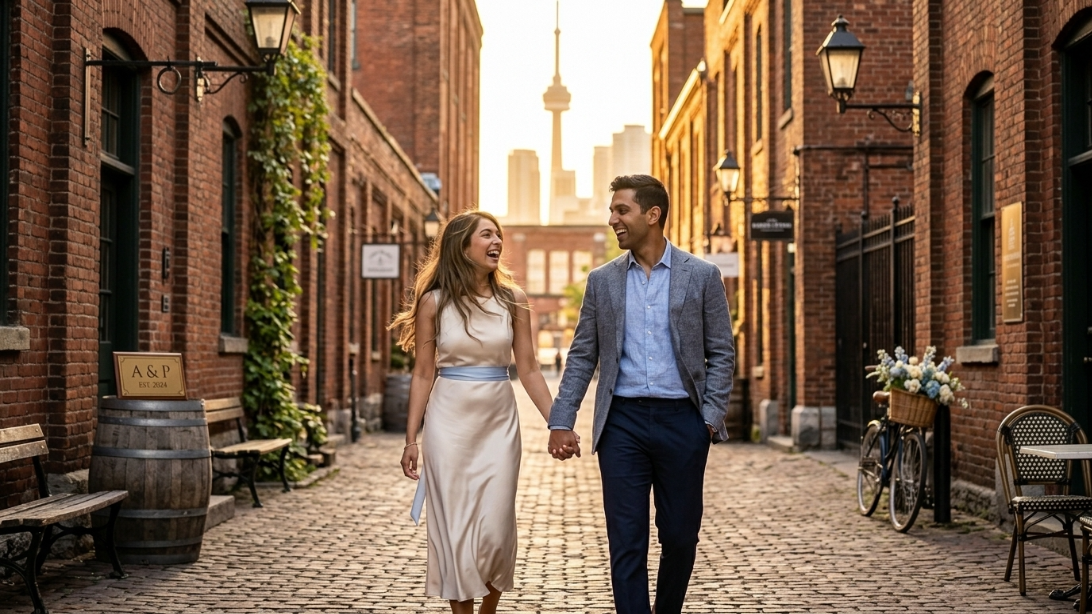
An engagement session is less a trend than a genuinely useful rehearsal, and more Toronto couples are treating it that way.
Most people are not comfortable in front of a camera. An hour-long session weeks before the wedding fixes that you learn how your photographer directs, they learn how you two interact, and by the wedding day the camera is no longer a novelty. The difference it makes to wedding-day portraits is obvious and immediate.
The images earn their keep elsewhere too: save-the-dates, invitations, your wedding website, and the social announcement.
Toronto gives you strong options depending on the look you want. The Scarborough Bluffs and Toronto Islands offer open landscape and water. Trinity Bellwoods and High Park give you seasonal colour. The Distillery District and the downtown core deliver urban texture and architecture. Choose the one that matches your wedding’s aesthetic rather than the one that photographs best in isolation.
Social-First Delivery: Sneak Peeks, Verticals and Reels
Instagram and Pinterest are shaping wedding photography in both directions: what gets shot, and how it gets delivered.
On the aesthetic side, film grain, flash, moody colour grading and editorial portraits all spread through these platforms first. Couples arrive at consultations with saved boards and a clear visual vocabulary, which makes conversations far more productive than they were five years ago.
On the delivery side, expectations have changed. A sneak-peek set within 24 to 48 hours is close to standard now. Vertical crops are being delivered alongside horizontals. Short video clips and Reels-ready edits are increasingly part of the package rather than an add-on.
One caution worth holding on to. A photographer shooting primarily for social performance often delivers a gallery that ages poorly with heavy trend-driven grading, repetitive compositions, and very little coverage of anything that would not perform online. Your gallery has to work as a record of the day in ten years, not just as a post in the first week. Ask to see a full delivered gallery, and check whether the quiet moments are there alongside the shareable ones.
Which Wedding Photography Style Is Right for You?
| If your wedding is… | Consider | Because |
|---|---|---|
| A downtown loft or urban venue | Docu-editorial with direct flash | Architecture supports editorial framing; flash suits the nightlife energy |
| A garden or estate daytime celebration | Fine art with editorial portraits | Natural light and detail-driven frames match the setting |
| A multi-day South Asian celebration | Documentary-led coverage | Multiple events and large families need observation, not orchestration |
| An intimate elopement | Documentary with film | Small guest count allows quiet coverage; film adds warmth and texture |
| A destination or scenic outdoor wedding | Cinematic with drone coverage | Landscape context and dramatic light are the whole point |
Most weddings do not fit one row cleanly, and they should not have to. The right photographer moves between approaches across the day rather than applying one style to everything.
How to Choose a Toronto Wedding Photographer in 2026
Technical competence is largely a given now. What separates photographers is judgement, knowing when to step in, when to stay back, and what a moment is worth.
What a Strong Portfolio Actually Shows
Portfolios are highlight reels by design. The single most useful thing you can ask for is a full gallery from one complete wedding not a curated selection.
A full gallery tells you what a portfolio cannot:
- Whether quality holds through a dark reception, not just golden hour
- Whether the editing is consistent from morning to midnight
- Whether family and group photos are handled competently
- Whether the quiet in-between moments were noticed at all
- Whether the volume and variety match what was promised
If a photographer hesitates to share one, that hesitation is information.
Questions Worth Asking Before You Book
- Who is actually shooting my wedding, and will I meet them beforehand?
- What is your approach when the timeline runs late?
- How do you handle low-light receptions?
- What is the delivery timeline for sneak peeks and the full gallery?
- Do you carry backup equipment and insurance?
- Can I see a full gallery from a wedding at a venue similar to mine?
For a fuller version of this conversation, read our complete guide to questions to ask your wedding photographer before you sign anything.
Book Your 2026 Wedding Photography with Moment Tracker
Moment Tracker photographs weddings across Toronto and the GTA with a documentary-led approach and an editorial eye, quiet observation through the day, deliberate direction where it counts.
We cover everything from intimate ceremonies and elopements to full multi-day celebrations, with flexible packages, second photographer options, and coverage across Toronto, Mississauga, Markham, Richmond Hill and beyond.
View our portfolio to see how the styles above look across real weddings, or get in touch to talk through your date, venue and timeline.
Final Thoughts
The through-line across every trend in 2026 is the same: couples want photographs that are both true and beautiful, and they are no longer willing to trade one for the other. Docu-editorial has become the leading style because it refuses that trade-off, and the styles around it film, flash, moody lighting, prompted portraits are all tools for the same goal.
Choose a photographer whose full galleries you would be happy to receive, and the style conversation mostly takes care of itself.
Frequently Asked Questions
1. What wedding photography style is trending in Toronto in 2026?
Docu-editorial photography is the leading trend. It combines documentary coverage of the day as it happens with editorial-quality direction during portraits, giving couples emotionally honest images with a polished, magazine-style finish.
2. What is the difference between candid and documentary wedding photography?
Candid describes individual unposed images and can appear within any style. The documentary describes the photographer’s entire approach observing rather than directing across the whole day and building the gallery as a chronological story.
3. Is film photography still worth it for weddings?
Yes, and 35mm remains in strong demand for its grain, warm tones and softer highlights. Most photographers now shoot hybrid digital for coverage volume, film for portraits and quiet moments which balances the look against film’s slower turnaround.
4. What is direct flash wedding photography?
Direct flash uses on-camera flash to create high contrast, hard shadows and a bold nightlife aesthetic. It suits receptions, dance floors and after-party coverage, and is generally avoided for ceremonies and soft, natural-light-led weddings.
5. When is golden hour for a Toronto wedding?
It shifts significantly by season roughly 8:30 pm for a June wedding and before 6 pm in October. Ask your photographer for the exact window on your date and build a 20-minute gap into the reception timeline.
6. Do I need an engagement session before my wedding?
It is optional but genuinely useful. An hour with your photographer beforehand makes you noticeably more relaxed on the day, and the images work for save-the-dates, invitations and your wedding website.
7. Can I have drone photography at my Toronto wedding?
Often yes, but it depends on your venue and its airspace. Canadian drone operation requires a certified pilot and Transport Canada compliance, and parts of the GTA sit in controlled airspace. Raise it early so it can be confirmed.
8. How do I choose the right wedding photographer?
Ask to see a full gallery from one complete wedding rather than a curated portfolio. It shows whether quality, editing consistency and moment-catching hold up across an entire day, including the difficult low-light hours.