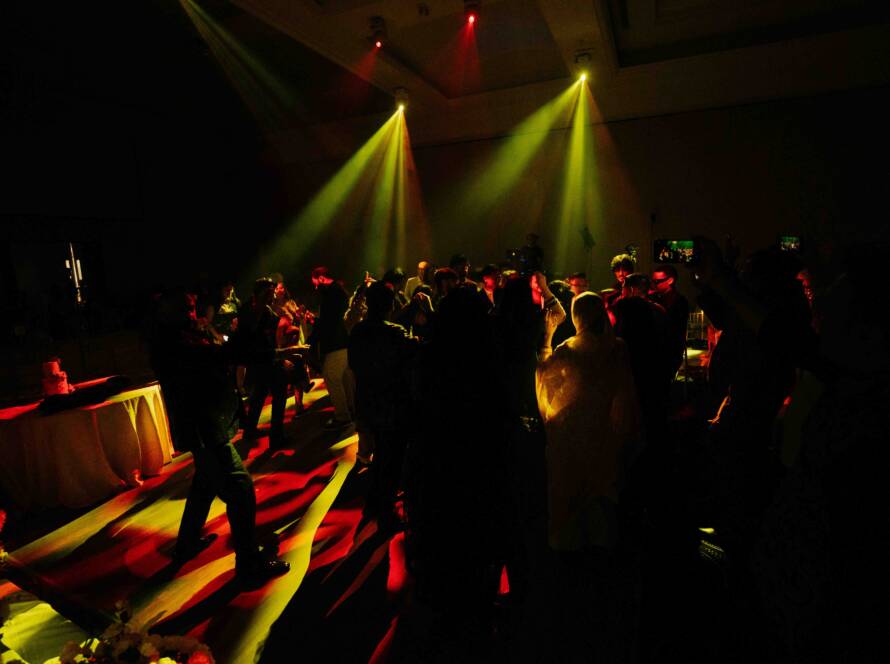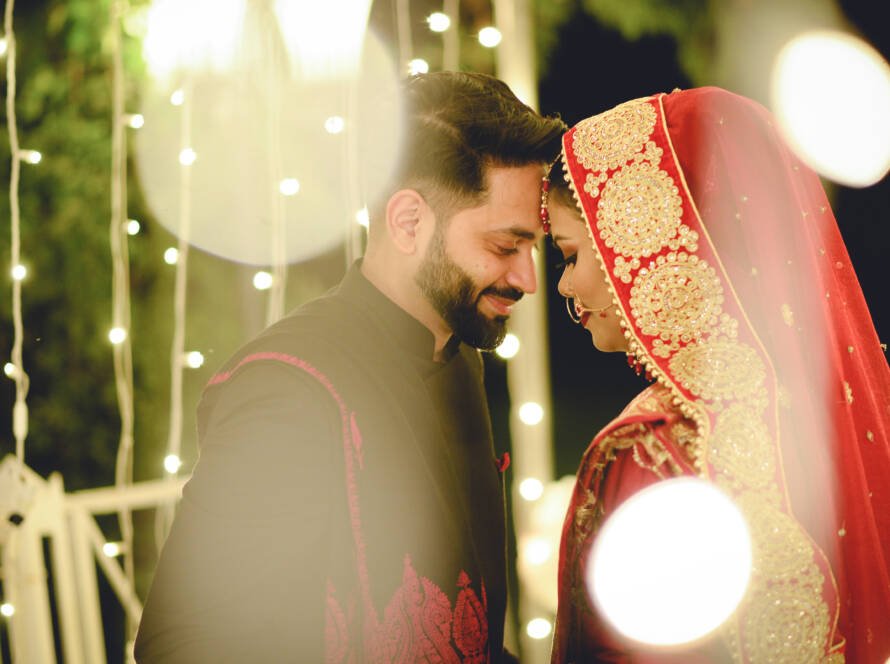
Your flowers wilt. Your cake gets eaten. Your photos are the only part of the day you still hold twenty years later.
That is why the questions you ask a wedding photographer in Toronto matter more than the portfolio you scroll through first. Every portfolio looks good, that is what a portfolio is for. The gaps show up somewhere else: in the contract, in the delivery timeline, in who actually walks through the door on your wedding morning.
This guide gives you the 15 questions to ask, what a strong answer sounds like, and the red flags that should end a consultation early. Use it as a script. Copy the bolded questions straight into your first email.
Before You Ask: 4 Things to Do First
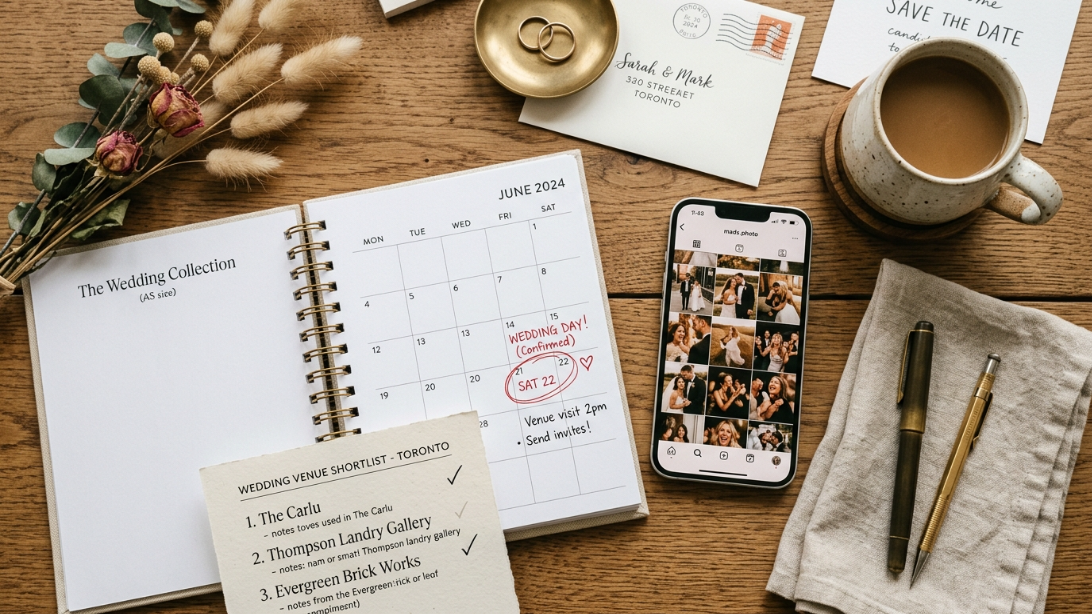
Walking into a consultation unprepared wastes everyone’s time. Do these four things first and your shortlist gets shorter and better.
Start your search 8–12 months out
Most Toronto couples book their photographer 8 to 12 months before the date. For a peak-season Saturday between June and September, stretch that to 18 months the photographers with the strongest reputations fill those dates first.
If you are engaged and your date is set, start now. Waiting rarely saves money and usually costs you your first choice. Our guide on when to book a wedding photographer in Toronto breaks the timeline down month by month.
Decide your style before you compare portfolios
Four styles dominate Toronto weddings:
- Documentary — unposed, moment-driven, minimal direction
- Traditional — structured group shots and classic portraits
- Editorial — styled, high-fashion, magazine-influenced
- Cinematic — moody colour grading and film-inspired framing
Most photographers blend two. Knowing which two you want stops you from comparing a documentary shooter against an editorial one and wondering why they feel so different. See which wedding photography style is trending in Toronto in 2026 if you are still deciding.
Shortlist 4–6 photographers, not 20
Twenty tabs is not research, it is paralysis. Filter on three things: your date is available, their base package fits your budget, and their last three published weddings look consistent, not just their best three.
Six is enough. You will not have the time or the energy to interview more than that properly.
Book consultations, not just email threads
A 30-minute call tells you what a PDF cannot. Are they easy to talk to? Do they listen, or do they pitch? You will spend more hours with this person on your wedding day than with almost anyone else, including your own family.
Couples who feel relaxed around their photographer get more natural photos. That is not a soft benefit; it shows up in the gallery.
Style, Portfolio and Fit (Questions 1–3)
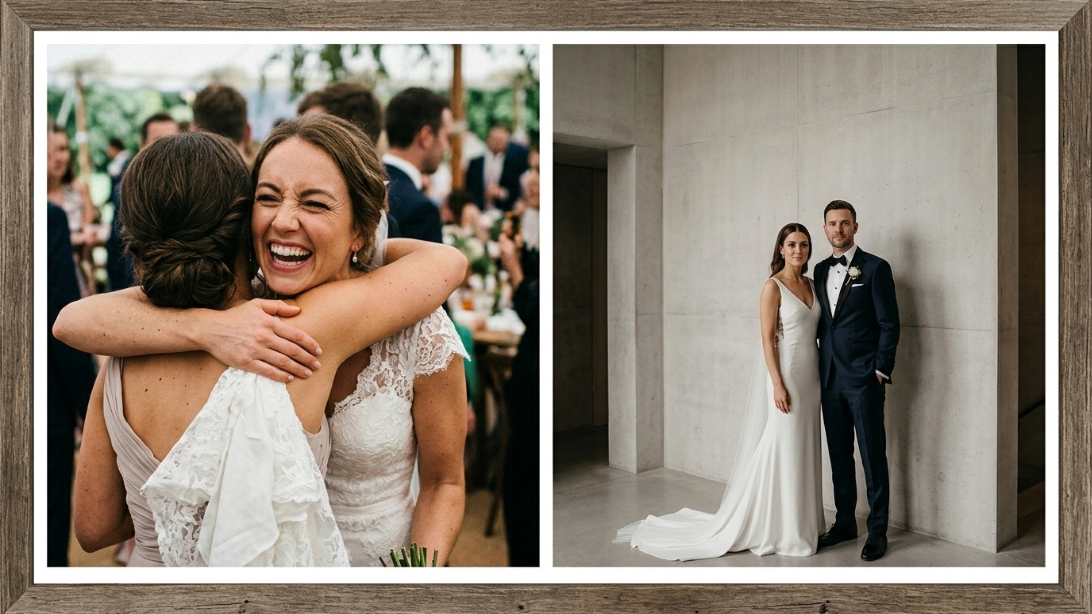
Start here. If the fit is wrong, nothing else in the list matters.
1. What is your photography style, and how would you describe it in your own words?
Ask: “How would you describe your style, and what kind of wedding do you shoot best?”
Why it matters: Photographers who know their own style deliver consistently. Photographers who say “a bit of everything” often deliver whatever the last Pinterest board asked for.
A good answer sounds like: A clear self-description, plus an honest note on what they are not. “I shoot documentaries with editorial portraits; if you want three hours of formal group photos, I’m not your person.”
Red flag: They mirror your words back without adding anything.
2. Can we see two or three complete wedding galleries?
Ask: “Could you send full galleries from two or three recent weddings, ideally one at a venue like ours?”
Why it matters: A highlight reel is 40 images pulled from 4,000. A full gallery shows you the whole day: the bright 2pm ceremony, the harsh midday portraits, the dim 10pm dance floor. That is where skill becomes visible.
A good answer sounds like: They send links without hesitation, including a wedding that was not perfectly lit or perfectly styled.
Red flag: Only curated highlights, or the same five hero images across their whole website. Compare what you are seeing against the 7 must-have shots every wedding photographer should capture.
3. Have you shot at our venue, or venues like it?
Ask: “Have you worked at our venue before? If not, what similar spaces have you shot?”
Why it matters: Toronto venues are wildly different. A downtown loft with north-facing windows, a banquet hall with low ceilings and colour-cast uplighting, an outdoor ceremony in High Park each needs a different approach, and no one figures that out on the fly.
A good answer sounds like: Either direct venue experience, or a plan “I haven’t shot there, so I’d scout it two weeks out and check the ceremony light at your exact time.”
Red flag: “I can shoot anywhere, it doesn’t matter.”
Experience and Who Actually Shows Up (Questions 4–5)
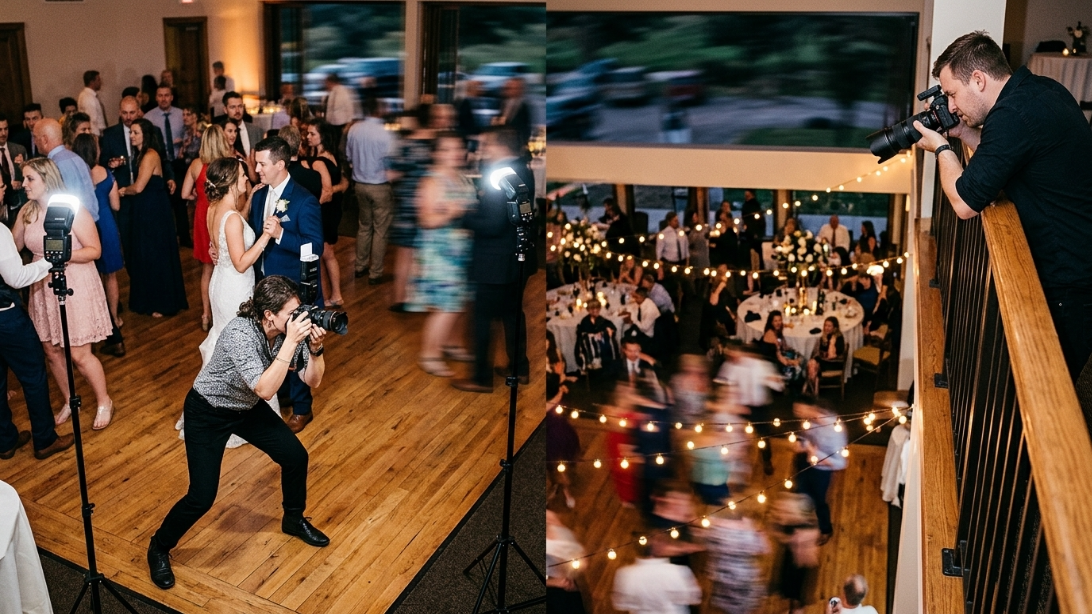
4. Who will actually photograph our wedding?
Ask: “Will you personally be shooting our day, or an associate? If it’s an associate, can we see their full portfolio and meet them?”
Why it matters: This is the most common unpleasant surprise in wedding photography, and most couples never think to ask. Larger studios book under a founder’s name and assign associate shooters. That is not automatically bad. Many associates are excellent but you should be choosing the person, not the logo.
A good answer sounds like: A direct name, and if it is an associate, an offer to share their galleries and set up an introduction before you sign.
Red flag: Vague phrasing like “one of our team.” Get the answer in writing in the contract.
5. How many weddings have you shot, and how many do you take per year?
Ask: “How many weddings have you photographed in total, and how many are you booking for our season?”
Why it matters: Total experience tells you whether they can handle a ceremony running 40 minutes late or a sudden downpour. Annual volume tells you something different: how much attention your gallery gets in editing, and how fast they will reply in the eight months before your date.
A good answer sounds like: Specific numbers, plus how those numbers affect your turnaround.
Red flag: An evasive answer, or a volume so high that a 12-week edit backlog is inevitable.
Packages, Pricing and Payment (Questions 6–7)
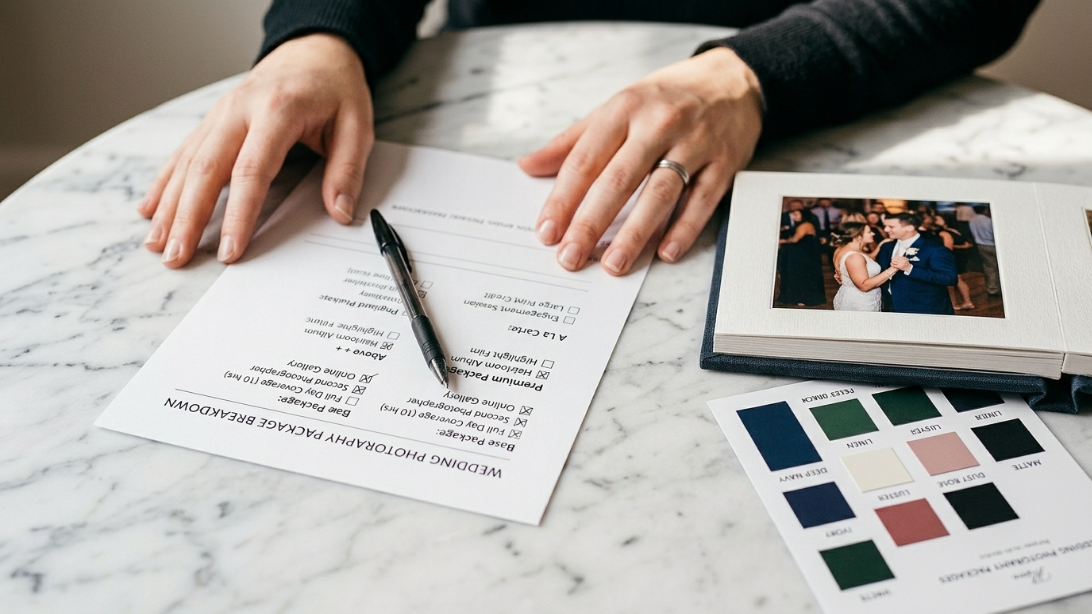
6. What exactly is included in each package?
Ask: “Can you send a written breakdown of what’s included at each tier?”
Why it matters: “Eight hours of coverage” means different things at different studios. Get clarity on every line:
- Hours of coverage and what counts as the start time
- Number of photographers
- Engagement session, and whether it is transferable
- Travel fees beyond a certain radius
- Albums, prints and how many revision rounds
- Number of edited images delivered
- Online gallery hosting duration and download rights
Our breakdown of Toronto wedding photography packages and what’s usually included shows what is standard versus what is an upsell.
Red flag: Verbal-only pricing, or a package that only exists “for you, this week.”
7. How do pricing, deposits and payments work?
Ask: “What’s the deposit, when are the remaining payments due, and what happens if we cancel or postpone?”
Why it matters: Deposits are usually non-refundable, and that is normal. What is not normal is a cancellation clause you never read. Postponement policy matters especially — plenty of Toronto couples moved dates in recent years and learned their contracts said nothing about it.
A good answer sounds like: A clear schedule, a stated refund and postponement policy, and a professional invoicing method.
Red flag: Cash-only, e-transfer with no invoice, or full payment demanded up front.
Coverage, Timeline and Deliverables (Questions 8–11)
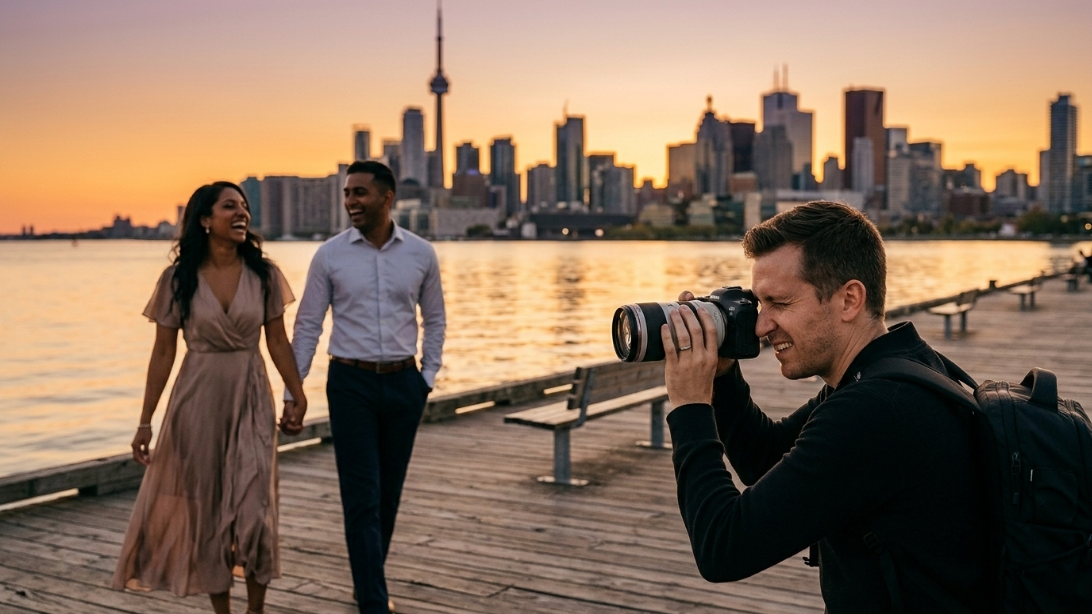
8. Do you offer engagement sessions?
Ask: “Is an engagement session included, and can we do it at a location we choose?”
Why it matters: An engagement shoot is a rehearsal. You learn how they direct, they learn how you move, and by the wedding day nobody is stiff. It also gives you images for save-the-dates and your website.
If posing makes you nervous, these engagement photo ideas for camera-shy couples are worth reading before the session. For location ideas, couples often start with a pre-wedding shoot in downtown Toronto.
9. How do you handle low light and difficult indoor venues?
Ask: “How do you shoot a dim reception hall, do you use flash, and what does that look like in your galleries?”
Why it matters: Toronto receptions run late and indoors. Low light is where cheap gear and thin experience become obvious: muddy skin tones, motion blur, heavy noise.
A good answer sounds like: Specifics off-camera flash setups, fast prime lenses, dual-card bodies that hold up at high ISO and a gallery link that proves it.
Red flag: “I only shoot natural light” with no plan for what happens after sunset.
10. Can we give you a short list?
Ask: “We have a few must-have shots and family groupings. How do you like to handle that?”
Why it matters: Cultural and family moments are unrepeatable and easy to miss if nobody flagged them. A Nikkah signing, a Sofreh Aghd mirror moment, a grandparent who is not travelling again your photographer cannot prioritise what they do not know about.
A good answer sounds like: They welcome a family-portrait list and ask about cultural elements themselves, while asking for creative freedom on everything else.
Red flag: Refusing any shot list at all, or agreeing to a 200-item spreadsheet without pushing back.
11. When will we get our photos, and how many?
Ask: “What’s your delivery timeline for sneak peeks and the full gallery, and roughly how many edited images do we get?”
Why it matters: Timelines vary enormously. Most Toronto photographers deliver a sneak peek within 1–2 weeks and the full gallery in 6–12 weeks; albums usually take longer. Put the number in the contract.
On image count more is not better. A thousand near-duplicates is a worse gallery than 600 well-culled images. Ask what their culling philosophy is.
Red flag: “Whenever it’s ready,” or a timeline that is not written down anywhere.
Insurance, Backups and Your Contract (Questions 12–15)
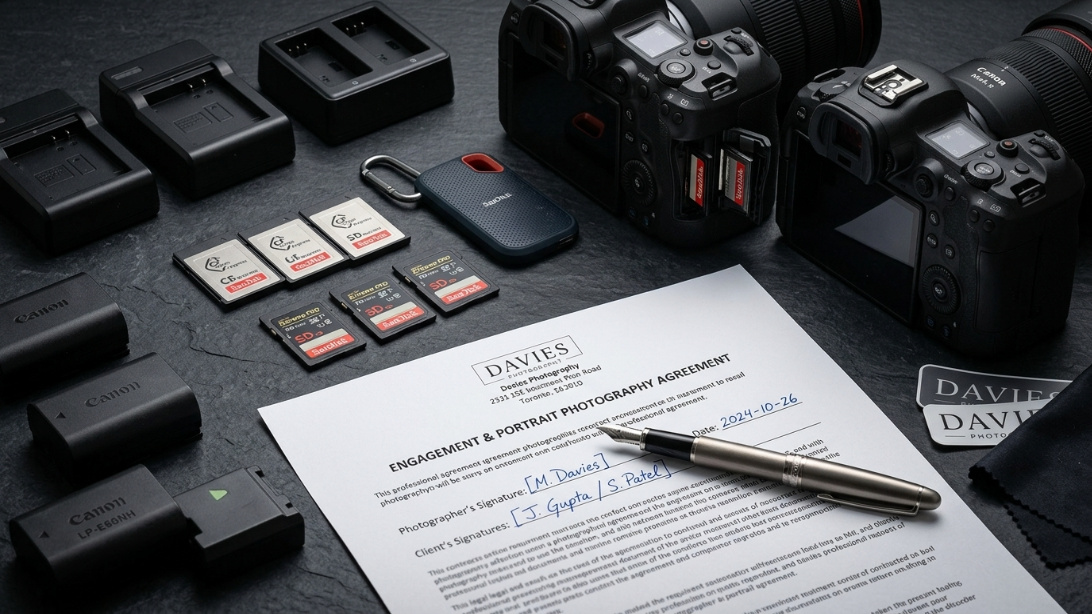
12. What is your backup plan if something goes wrong?
Ask: “What happens if your camera fails, or if you get sick the week of our wedding?”
Why it matters: Gear breaks and people get ill. Professionals plan for it; hobbyists hope.
A good answer sounds like: Two camera bodies minimum, spare lenses and flashes, and a named network of photographers who cover each other for emergencies with that arrangement written into the contract.
Red flag: One camera, one lens, no plan.
13. Do you carry liability insurance?
Ask: “Can you provide a certificate of liability insurance for our venue?”
Why it matters: Many Toronto venues require vendor insurance before they will let someone work on site. Beyond compliance, it signals a photographer who runs an actual business.
A good answer sounds like: Yes, with a certificate they can send directly to your venue coordinator.
Red flag: Not knowing what you are asking about.
14. How do you back up and store our images?
Ask: “How are our files backed up on the day and afterwards, and how long do you keep them?”
Why it matters: The nightmare scenario is a single memory card failing before anything is copied off it.
A good answer sounds like: Dual-card recording in-camera on the day, then copied to at least two separate physical drives plus cloud storage before any card is formatted and a stated retention period, usually 12 months after delivery.
Red flag: Single-slot cameras with no in-day offload, or no retention answer at all. Download and back up your own gallery as soon as you receive it, regardless.
15. What does the contract cover, and who owns the photos?
Ask: “Can we see the full contract before we commit? Who holds copyright, and what are we licensed to do with the images?”
Why it matters: In Canada, the photographer normally retains copyright and grants you a personal-use licence. That is standard. What you need to confirm is the scope of your licence. Can you print freely, post online, submit to a publication? And can they use your photos in their marketing, including images of your guests?
The contract should name the date, venue, hours, exact shooter, deliverables, delivery timeline, payment schedule, cancellation and postponement terms, and the copyright and usage clause.
Red flag: No written contract, or a one-page document with no cancellation clause. Never book without a signed agreement, no matter how well the call went.
How to Read the Answers You Get
The questions are only half the work. Five signals separate a professional from a well-marketed amateur.
Clarity. Experienced photographers answer in specifics — numbers, names, timelines. Vague answers usually mean vague processes.
Transparency. Pricing, policies and timelines offered up front, in writing, without you having to chase them.
Adaptability. Ask what went wrong at a recent wedding and how they handled it. Everyone has a story. The ones who tell it well have solved real problems.
Portfolio consistency. Judge them by their average wedding, not their best. Five strong weddings in a row beats one spectacular one.
Responsiveness. How quickly and carefully they reply now is the best available preview of how they will communicate during the eight months before your date.
6 Red Flags Worth Walking Away From
- No written contract, or reluctance to share it before a deposit
- Prices that change between conversations, or pressure to book “today”
- Only highlight images — never a full gallery, even when asked
- Cannot name who is actually shooting your wedding
- No backup camera and no emergency cover arrangement
- Reviews that praise the photos but repeatedly mention slow replies or late delivery
One of these deserves a direct question. Two or more means keep looking.
What a Toronto Wedding Photographer Costs in 2026
Photography typically absorbs 10–12% of a Toronto wedding budget. Typical market ranges:
| Tier | Typical range (CAD) | Usually includes |
|---|---|---|
| Entry / short coverage | $1,500 – $3,000 | 4–6 hours, single photographer, digital gallery |
| Mid-range | $3,000 – $5,000 | 8+ hours, engagement session, second shooter on some packages |
| Premium / editorial | $5,000+ | Full-day and multi-day coverage, second shooter, album, faster turnaround |
What moves the number: total hours, whether a second photographer is included, the photographer’s demand and experience, your date (peak-season Saturdays cost more), travel outside the GTA, and physical products like albums.
Multi-day South Asian, Persian and other cultural celebrations sit above these ranges because they need more days and more shooters price them as multi-event coverage, not as a single wedding. For a deeper breakdown, see how much you should pay a wedding photographer in Toronto.
Why the Right Photographer Matters More in Toronto
Toronto is not one wedding market. It is a downtown loft, a Distillery District courtyard, a banquet hall in Scarborough, a garden ceremony in Etobicoke and a three-day cultural celebration across two venues often in the same weekend.
That range demands adaptability. A photographer needs to handle a rainy October ceremony moved indoors with 40 minutes’ notice, know when a Baraat is about to start, read the light in a hall with heavy uplighting, and keep a fast timeline moving without taking over the day.
Experience in this specific city is not a nice-to-have. It is the difference between someone documenting your wedding and someone reacting to it. Browsing wedding photography locations in Toronto is a useful way to see whether a photographer’s portfolio matches the kind of day you are planning.
Frequently Asked Questions
How far in advance should I book a Toronto wedding photographer?
Book 8 to 12 months ahead. For a peak-season Saturday between June and September, aim for 12 to 18 months. Photographers with strong reputations release their calendars early and fill prime dates first.
What is the average cost of a wedding photographer in Toronto?
Most Toronto couples spend between $2,000 and $5,000. Entry-level and short-coverage packages start around $1,500, while premium full-day coverage with a second shooter and album commonly exceeds $5,000.
How many photos will we receive from our wedding?
Typically 400 to 800 edited images for eight hours of coverage, though this varies by photographer and style. Ask for a minimum number in writing rather than relying on an estimate.
How long does it take to get wedding photos in Toronto?
Expect a sneak peek of 20 to 50 images within one to two weeks, and your full gallery in six to twelve weeks. Albums usually add another four to eight weeks after you approve the design.
Do wedding photographers include engagement sessions?
Many include them in mid and upper-tier packages, and offer them as a paid add-on otherwise. Confirm whether the session is transferable if your plans change.
Who owns the copyright to our wedding photos?
In Canada the photographer normally retains copyright and grants you a personal-use licence covering printing and sharing. Commercial use and publication usually need written permission, so check the licence wording before signing.
What happens if my photographer cancels?
A professional contract sets out a replacement plan, usually through a network of photographers who cover each other, along with refund terms if no replacement is found. Confirm this clause exists before you pay a deposit.
Ready to Book?
The right photographer does two things at once: they capture the day accurately, and they make the day easier while it is happening. The 15 questions above are how you tell, before you sign, which one you are hiring.
At Moment Tracker, we connect Toronto couples with photographers who already meet this standard insured, contracted, venue-experienced and consistent across full galleries, not just highlight reels. Browse our wedding photographers in Toronto, or explore wedding videography if you want the day captured in motion too.
Contact Moment Tracker to check availability for your date.