Planning a Lebanese wedding in Toronto comes with a lot to look forward to, but it also means there is a lot happening in a single day. You may have family getting ready, a religious ceremony, emotional portraits, the excitement of the Zaffe entrance, Dabke, speeches, and a reception that keeps everyone on the dance floor.
So, how do you make sure those moments are captured without turning your wedding into a constant photo session? That starts with understanding the traditions, timing, and photographs that matter most.
Let’s have a look at what to plan for your Lebanese wedding photography in Toronto and the GTA.
What Makes Lebanese Wedding Photography Different?
Lebanese weddings are full of family, energy, and celebration, with parents, grandparents, friends, musicians, and guests all becoming part of the story. The Zaffe and Dabke bring music, movement, and excitement, creating a different photography environment from a quiet, intimate wedding.
A good approach combines:
- Candid wedding photography
- Family and group portraits
- Cultural wedding photography
- Editorial couple portraits
- Detail photography
- Reception and dance floor coverage
- Fast paced event photography
The goal is not to stage every moment. It is to understand what is happening and be ready when something important unfolds.
Lebanese Wedding Traditions Photographers Should Understand
Knowing the traditions beforehand helps a photographer anticipate moments instead of reacting after they happen.
Henna Night
Some Lebanese families hold a Henna Night before the wedding. It may be a small family gathering or a larger celebration with music, food, dancing, and traditional clothing.
Photographers can capture the bride getting ready, henna details, family interactions, decorations, and moments shared between generations. If planned, it is best covered as a separate photography event.
The Zaffe
The Lebanese Zaffe is a lively procession marking the couple’s entrance, often featuring drummers, dancers, singers, music, and cheering.
Because the entrance can move quickly, the photographer needs to be ready for changing positions and crowd movement. Wide shots show the energy of the celebration, while closer images capture the couple and family reactions.
Dabke
Dabke is another major part of many Lebanese wedding celebrations. Guests often join hands or shoulders and form a line, following the rhythm and movements of the lead dancer.
This is one of those moments where candid photography works particularly well.
Instead of photographing only the lead dancer, the photographer should look across the entire line. Grandparents watching from their seats, friends joining the dance, parents reacting, and guests celebrating around the floor can all add context to the story.
A Typical Lebanese Wedding Photography Timeline
There is no single timeline that applies to every Lebanese wedding. Some celebrations take place across several days, while others combine traditions into one schedule.
A typical wedding day might look something like this:
| Time | Photography Focus |
| 10:00 AM | Bride and groom preparations |
| 12:00 PM | Detail photography and family moments |
| 1:00 PM | Individual portraits |
| 2:00 PM | Religious ceremony or civil ceremony |
| 3:30 PM | Family and wedding party portraits |
| 4:30 PM | Couple portraits |
| 6:00 PM | Reception details and guest arrivals |
| 7:00 PM | Zaffe entrance |
| 7:30 PM | Dabke and reception celebrations |
| 9:00 PM | Dinner, speeches and cake |
| 10:00 PM onward | Dancing, candid moments and final reception coverage |
The actual schedule can change significantly depending on the venue, ceremony time, travel between locations, and number of events.
This is why building the photography timeline around the actual wedding schedule is much more useful than following a generic wedding photography template.
Must Have Lebanese Wedding Photos
A Lebanese wedding gallery should feel like a complete story rather than a collection of attractive portraits.
Getting Ready Moments
Start with the quiet details before the celebration begins.
Photographs of the wedding dress, jewellery, shoes, invitation, rings, flowers, perfume, and other personal details help establish the story.
Then move toward the people. A mother helping the bride, siblings sharing a moment, friends getting ready together, or the groom spending time with his family can often become more meaningful than another posed photograph.
Family Portraits
Family photographs are particularly important at large Lebanese weddings.
Parents, grandparents, siblings, extended relatives, and close family friends may all be part of the celebration. A well planned family shot list can prevent important combinations from being forgotten.
It is worth preparing this list before the wedding rather than trying to remember every group during the reception.
The Ceremony
The ceremony deserves complete coverage, not only the exchange of vows or rings.
Capture the couple’s entrance, reactions from family members, important religious moments, readings, prayers, signing, congratulations, and the first interactions immediately after the ceremony.
The exact moments will depend on whether the couple has a church wedding, another religious ceremony, or a civil celebration.
Couple Portraits
Lebanese weddings often provide plenty of opportunities for dramatic couple portraits.
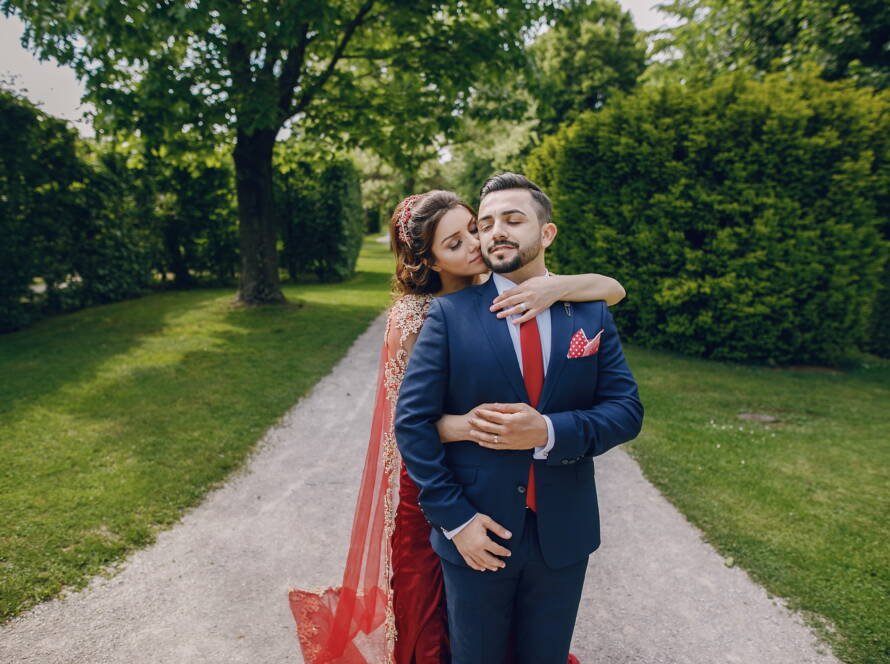
The photographer can combine relaxed candid images with a few carefully directed portraits. Architectural venues, dramatic reception spaces, outdoor locations, and evening lighting can all add variety.
The important thing is not to spend too much time away from the celebration. A short, well planned portrait session can give the couple beautiful images without making them miss the moments happening with their guests.
Learn about the couple wedding photography timeline to stay up to date with the trend.
The Zaffe Entrance
This deserves its own section in the shot list.
Photographs should capture:
- The couple entering
- Zaffe performers
- Drummers and musicians
- Guests reacting
- Family members cheering
- Wide views of the procession
- Close reactions from the bride and groom
- The transition onto the dance floor
A second photographer can be particularly useful during a large Zaffe because one photographer can focus on the couple while another captures family and guest reactions.
Dabke and Dance Floor
Do not photograph only the people at the centre of the dance floor.
Look for the full picture: linked hands, movement, expressions, musicians, friends joining the line, and family members watching from nearby.
These images often give a wedding gallery its sense of energy.
Reception Details
Before guests fill the room, photograph the reception space.
Capture the stage, tables, centrepieces, flowers, cake, menus, lighting, seating arrangements, and other details chosen by the couple.
These photographs become particularly valuable later because the room itself may look completely different once the celebration begins.
Choosing the Right Photographer for a Lebanese Wedding
Experience with multicultural weddings matters because every celebration has its own rhythm.
You want a photographer who can move between candid moments, family portraits, couple portraits, cultural traditions, and fast moving reception events without making the day feel like a photoshoot.
It also helps to review complete wedding galleries rather than choosing a photographer based only on a few images posted online.
Look at how they photograph:
- Large families
- Indoor receptions
- Low light
- Dance floors
- Cultural ceremonies
- Couple portraits
- Emotional moments
- Fast moving entrances
Choose a photographer who understands your traditions, handles the pace of the celebration, and captures both planned portraits and genuine moments.
Also read:How much a wedding photographer charges in Toronto.
Why Moment Tracker Is a Strong Choice for Lebanese Wedding Photography
Lebanese weddings can move quickly, with important moments often happening without warning. Moment Tracker understands this pace and combines candid storytelling with creative portraits throughout the day. From getting ready and family photographs to cultural traditions, the Zaffe, Dabke, and reception celebrations, the team focuses on capturing the moments as they happen.
With over 10 years of photography experience through its founder and more than 100 weddings photographed, Moment Tracker brings experience to large and multicultural celebrations across Toronto and the GTA. Couples can also explore the complete wedding portfolio to see how the team captures real celebrations from preparations through the reception.
Final Thoughts
Lebanese wedding photography is about capturing the celebration, from the Henna Night and ceremony to the Zaffe, Dabke, family moments, and reception. Some moments are planned, while others happen in seconds.
A well planned photography timeline helps capture everything without making the couple feel constantly directed. For couples planning a Lebanese wedding in Toronto, start with the traditions and photographs that matter most to your family.
FAQs
1. What traditions are commonly included in a Lebanese wedding?
Common traditions may include a Henna Night, Zaffe procession, Dabke, religious ceremony, family celebrations, music, and large reception gatherings.
2. What is a Zaffe at a Lebanese wedding?
A Zaffe is a celebratory wedding procession featuring music, drummers, dancers, cheering, and the couple’s grand entrance into the celebration.
3. How long should Lebanese wedding photography coverage be?
Coverage depends on the number of events, but multi event celebrations often require longer coverage than a standard single ceremony and reception.
4. Should I hire a second photographer for a Lebanese wedding?
A second photographer can be useful for large weddings, allowing simultaneous coverage of the couple, family reactions, preparations, and crowded reception moments.
5. What photos should be on a Lebanese wedding shot list?
Include preparations, details, family portraits, ceremony moments, couple portraits, Zaffe, Dabke, reception details, speeches, dancing, and candid family interactions.